Traditional Buddhist Art of Nepal has been practiced since thousands of years by the indigenous artists of Kathmandu Valley. It’s a well known fact that this unique traditional art has engraved its significance throughout the world. In the present artistic global scenario, the world of art seems incomplete without its presence. The aesthetic beauty inherent in this beautiful form of art known as Newah Art and it is well appreciated by all the art lovers, art connoisseur as well as laypersons. Traditional Newah Art is not only limited to its aesthetic beauty, it also familiarize us with the Buddhist Philosophy. By transferring Buddhist philosophy inherent in this classical art to implement them in one’s practical life can balance their spiritual satisfaction and physical happiness to improve the life of all sentient beings.

Paubha, derived from the term Patrabhattaraka, is a traditional Nepali painting that depicts gods and goddesses. As defined in the Nepal Brihat Shabdakosh, Paubha art is created to record events, worship personal or temple deities, support religious rituals, aid in meditation, and seek blessings after completing certain actions.

Sculpture is an ancient art form created using materials like stone, wood, bronze, and many others. It serves various purposes — from decorating homes to being showcased as masterpieces in museums. Sculptures often depict people, animals, or abstract ideas, expressing creativity and emotion through form and texture. They also play an important role in preserving culture, beliefs, and history across different civilizations.

Entrepreneurship is not just about starting a business; it’s about identifying opportunities, taking calculated risks, and creating value for society. Students should focus on understanding how innovative ideas are turned into practical solutions, how businesses are planned and managed, and how entrepreneurs balance creativity with responsibility and ethics.

History of Buddhist Art traces the development of art inspired by Buddhism, beginning with symbolic representations such as the lotus and Buddha’s footprints. As Buddhism spread to Nepal, Tibet, China, and Southeast Asia, local art forms like paubhas, thangkas, and temple sculptures evolved. Buddhist art continues to preserve religious teachings, culture, and history across centuries.

We successfully conducted the Entrance Examination for the Bachelor in Traditional Buddhist Art yesterday at Aksheswar Traditional Buddhist Art College BTBA.
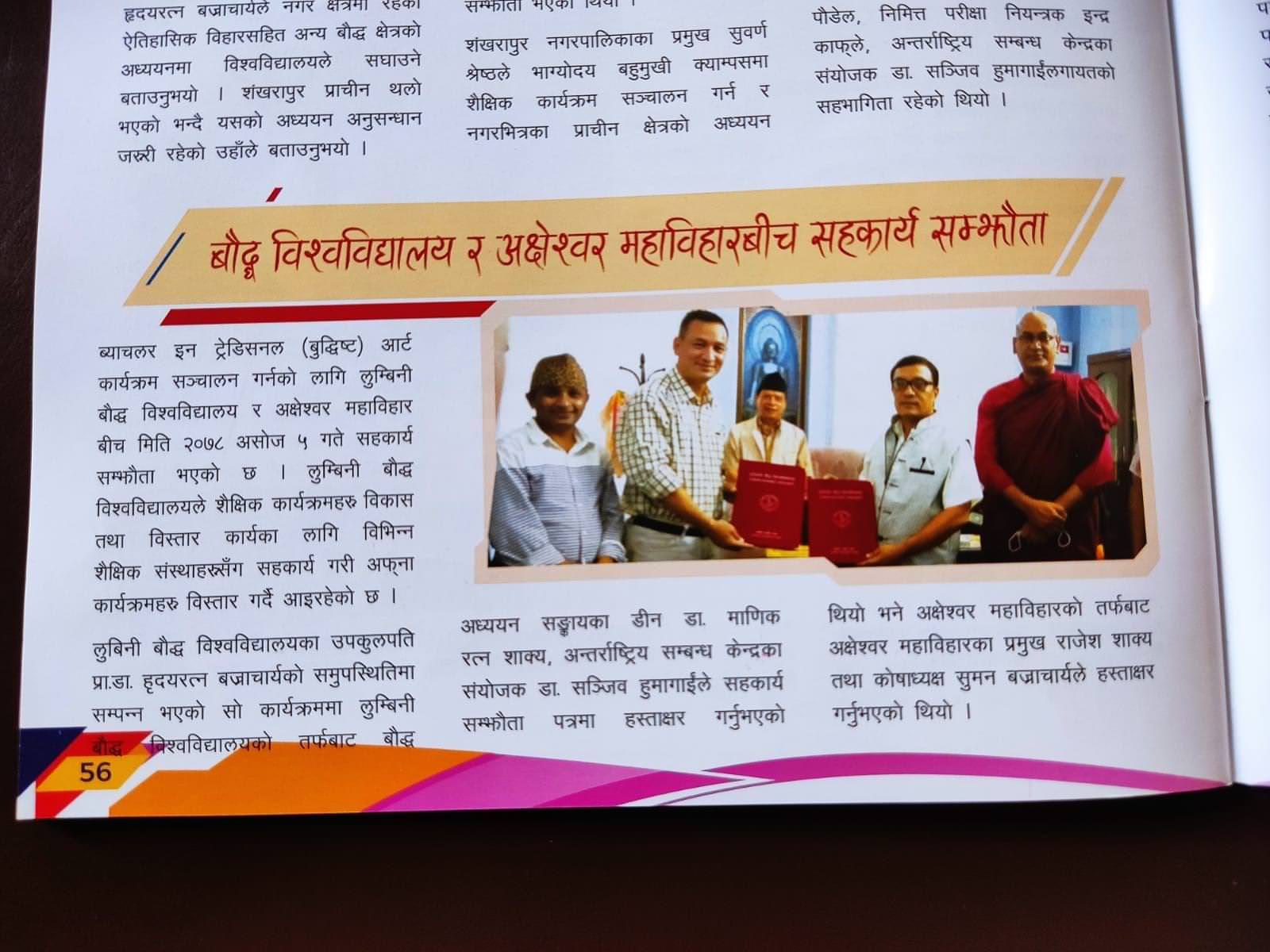
Cooperation agreement
In collaboration with Lumbini Buddhist University and Aksheswar Mahabihar
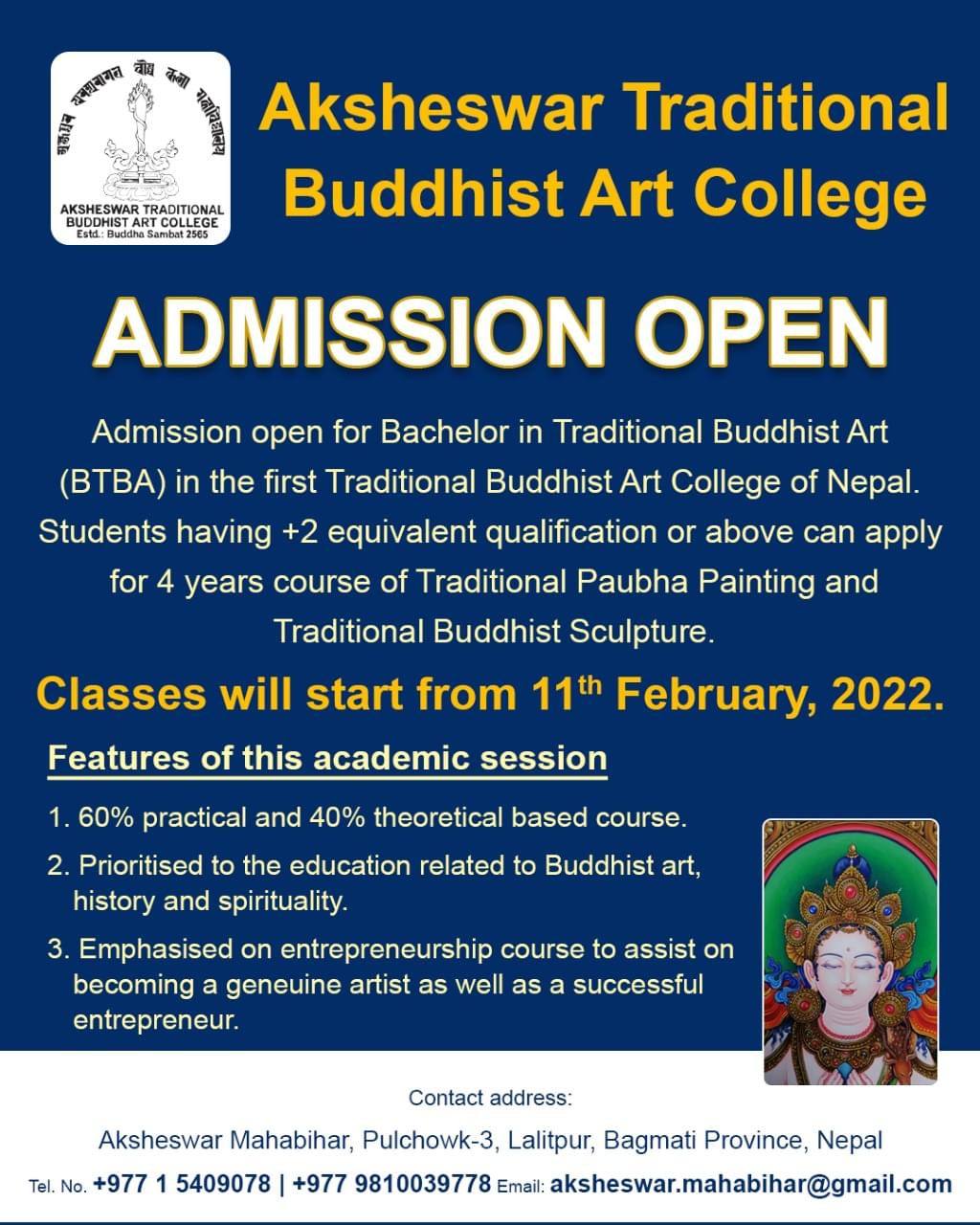
Nepal's First Traditional Buddhist Art College of Nepal